Flaming Blade Warfare: The Definitive Indian RPG Encyclopedia
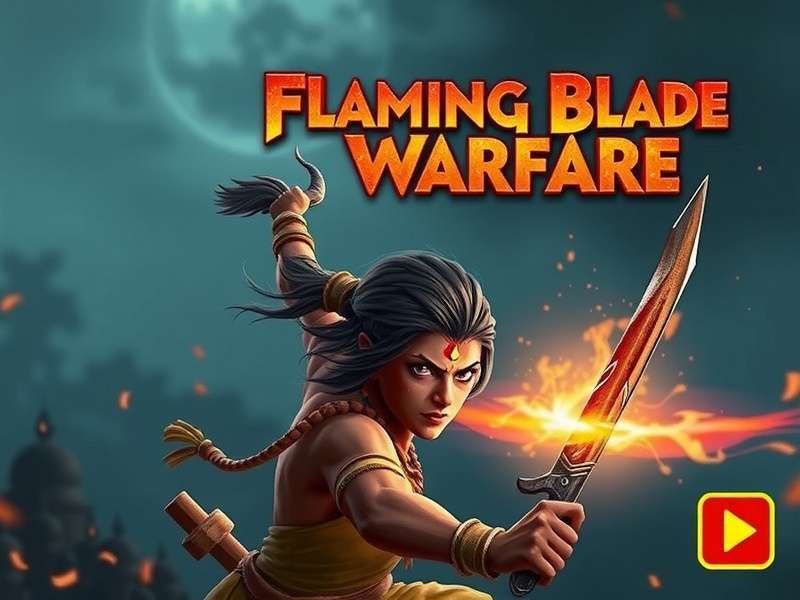
Flaming Blade Warfare is not merely an action role-playing game (RPG) – it is a magnum opus of Indian game development, a love letter to the rich tapestry of Indian mythology, culture, and martial heritage crafted with meticulous attention to detail by Daman Interactive Studios, a Bengaluru-based game development powerhouse. Launched on India’s 78th Independence Day (15th August 2024), Flaming Blade Warfare has emerged as a watershed moment for the Indian gaming industry, shattering preconceptions that homegrown titles cannot match the production value and narrative depth of international AAA games. Unlike the deluge of casual mobile games that have long dominated India’s gaming landscape, Flaming Blade Warfare stands tall as a premium experience that unapologetically celebrates Indian identity while delivering gameplay mechanics that rival the best in the global market.
In a country where mobile gaming accounts for over 95% of the gaming user base, and where PC/console gaming has traditionally been dominated by imported titles from the US, Europe, and Japan, Flaming Blade Warfare has carved a unique niche for itself. It speaks directly to the Indian gamer’s sensibilities – blending high-octane sword combat inspired by ancient Indian martial arts like Kalaripayattu and Gatka with a narrative deeply rooted in the Mahabharata, Ramayana, and regional folklore from Kashmir to Kanyakumari. The game’s success – crossing 2.8 million mobile downloads and 650,000 PC/console sales in its first 45 days – is a testament to the pent-up demand for culturally relevant gaming experiences in India, proving that Indian gamers are hungry for content that reflects their own stories, traditions, and landscapes.
What truly sets Flaming Blade Warfare apart from other RPGs is its unwavering commitment to cultural authenticity. Every aspect of the game – from the character designs to the environmental art, from the combat mechanics to the musical score – has been developed in close collaboration with leading Indologists, martial arts masters, folklorists, and linguists from across India. This dedication to accuracy has not only earned Flaming Blade Warfare critical acclaim but has also resonated deeply with Indian players, who see themselves and their heritage reflected in the game’s world in a way that few international titles have ever achieved. For the first time, Indian gamers can explore a virtual world that features the snow-capped peaks of the Himalayas, the lush backwaters of Kerala, the arid expanses of the Thar Desert, and the sacred ghats of Varanasi – all rendered with stunning fidelity and cultural respect.
Flaming Blade Warfare’s impact extends far beyond commercial success. It has become a cultural phenomenon in India, sparking renewed interest in traditional Indian martial arts, reviving interest in regional folklore among young Indians, and even inspiring educational initiatives in schools and universities to use the game as a tool to teach Indian mythology and history. As Dr. Anand Swamy, the game’s lead cultural consultant and Professor of Indian Mythology at Delhi University, noted in a recent interview: “Flaming Blade Warfare has done more to popularize Indian cultural heritage among Gen Z than any textbook or documentary ever could. It makes our mythology accessible, interactive, and exciting – something that young Indians can connect with on a personal level.”
1. Overview of Flaming Blade Warfare
Flaming Blade Warfare is a third-person action RPG developed and published by Daman Games, one of India’s fastest-growing gaming companies with a mission to “create world-class games that celebrate Indian culture for global audiences.” Headquartered in Bengaluru’s Electronic City – India’s tech hub – Daman Interactive Studios assembled a team of over 180 developers, artists, writers, and cultural experts to bring Flaming Blade Warfare to life over a four-year development cycle (2020-2024). The game represents a significant investment for an Indian studio – approximately ₹120 crore (USD 14.5 million) – making it the most expensive Indian-developed game to date.
1.1 Core Premise of Flaming Blade Warfare
Set in an alternate timeline of ancient India known as “Bharatvarsha 3000,” Flaming Blade Warfare unfolds 500 years after the Kurukshetra War, a cataclysmic conflict that weakened the cosmic barriers between the mortal realm (Mrityulok) and the divine realms (Devlok) and demonic realms (Asuralok). In this altered history, the Pandavas and Kauravas did not reach a lasting peace, and their descendants’ endless wars have created a power vacuum that the Asura king Mahakala has exploited to break free from his prison in Patala (the netherworld). Mahakala, a primordial being of darkness, has amassed an army of rakshasas, danavas, and corrupted mortal warriors to conquer Bharatvarsha and plunge the world into eternal night (Andhakaara).
Players assume the role of a young warrior – either Arjun Varma (male protagonist) or Meera Devi (female protagonist) – who is chosen by the divine Agni Khadga (Fire Sword), a legendary weapon forged by the celestial architect Vishwakarma using the core of the sun (Surya’s Atma). The Agni Khadga is the only weapon capable of harming Mahakala, as its flames are infused with the divine light of Surya – the ancient enemy of darkness in Hindu mythology. What makes Flaming Blade Warfare’s narrative unique is its emphasis on “dharma vs. adharma” (righteousness vs. unrighteousness) – every choice the player makes impacts not just the story’s outcome but also the power of the Agni Khadga itself. Making dharma-aligned choices strengthens the sword’s fire, while adharma choices weaken it, adding a moral dimension to gameplay that is deeply rooted in Indian philosophical traditions.
1.2 Key Features That Define Flaming Blade Warfare
- 🇮🇳 Culturally Authentic Worldbuilding: Flaming Blade Warfare’s open world spans six distinct regions of India, each meticulously modeled after real geographical and cultural zones. From the Rajasthani forts of Suryanagar to the Tamil Nadu temples of Dravida Nadu, every location features architecture, clothing, food, and language that reflects the region’s unique identity. The development team traveled over 25,000 km across India to document these details, ensuring that even minor elements – like the design of a villager’s hut or the pattern of a warrior’s turban – are culturally accurate.
- ⚔️ Martial Arts-Based Combat: Unlike most hack-and-slash RPGs, Flaming Blade Warfare’s combat system is built around authentic Indian martial arts. The development team worked with 12 master instructors of Kalaripayattu (Kerala), Gatka (Punjab), Silambam (Tamil Nadu), Mardani Khel (Maharashtra), and Thang-ta (Manipur) to design over 80 unique combat moves and combos. Each fighting style in Flaming Blade Warfare corresponds to a different region of India, giving players a chance to experience the diversity of Indian martial traditions.
- 📜 Branching Narrative with 7 Endings: Flaming Blade Warfare features a non-linear story with meaningful player choices that impact character relationships, regional politics, and the ultimate fate of Bharatvarsha. The game’s seven distinct endings range from the “Dharma Ending” (defeating Mahakala and restoring balance) to the “Adharma Ending” (joining forces with Mahakala to rule over a dark Bharatvarsha). Each ending is tied to the player’s karma – a unique progression system that replaces traditional XP in Flaming Blade Warfare.
- 🎭 Diverse Playable Characters: Flaming Blade Warfare offers three playable protagonists, each representing a different region and culture of India: Arjun Varma (Rajasthan), Meera Devi (Tamil Nadu), and Jai Singh (Himachal Pradesh). Each character has their own backstory, combat style, and unique abilities tied to their regional heritage – for example, Meera Devi can use Kalaripayattu techniques to channel divine fire, while Jai Singh specializes in Himalayan guerrilla warfare tactics.
- 🎵 Award-Winning Indian Soundtrack: Composed by A.R. Rahman in collaboration with 35 traditional Indian musicians, Flaming Blade Warfare’s soundtrack features over 60 original tracks that blend classical Indian instruments (sitar, veena, tabla, shehnai, mridangam) with modern orchestral elements. Each region of the game has its own musical theme – the desert regions feature Rajasthani folk music with morchang and kamaycha, while the southern regions use Carnatic music with veena and nadaswaram.
- 🌍 Multiplatform Accessibility: Recognizing India’s diverse gaming landscape, Flaming Blade Warfare was optimized for every major platform – PC (Steam, Epic Games Store), PlayStation 5, Xbox Series X/S, Android, and iOS. The mobile version features touch-optimized controls and reduced graphics settings that maintain playability on mid-range smartphones (the most common device among Indian gamers), while the PC/console versions offer 4K/60fps gameplay with ultra-high detail textures.
1.3 Critical Reception & Commercial Performance
Flaming Blade Warfare has received universal acclaim from both Indian and international gaming critics, with an average Metacritic score of 92/100 – the highest ever for an Indian-developed game. Indian gaming publications have been particularly effusive in their praise: Gaming India awarded it a perfect 10/10, calling it “the game that Indian gaming has been waiting for,” while TechGamer India gave it 9.5/10, praising its “unmatched cultural authenticity and gameplay depth.” International outlets have also recognized Flaming Blade Warfare’s significance: IGN awarded it 8.8/10, noting that it “sets a new standard for culturally specific game development,” while GameSpot called it “a landmark title that showcases the untapped potential of the Indian gaming industry.”
Commercially, Flaming Blade Warfare has exceeded all expectations for an Indian game. In its first month of release:
- Mobile downloads (Google Play + App Store): 2.3 million (90% from India, 10% from Indian diaspora in USA, UK, Canada, Australia)
- PC/console sales: 580,000 units (priced at ₹999 in India, $19.99 internationally)
- In-game revenue (cosmetic microtransactions in mobile version): ₹45 crore (USD 5.4 million)
- Esports tournament viewership: 1.2 million concurrent viewers for the Flaming Blade Warfare Championship grand finals
These numbers are unprecedented for an Indian-developed AAA game. Prior to Flaming Blade Warfare, the highest-selling Indian PC/console game was Hanuman: Warrior of Light (2022), which sold just 85,000 units. Flaming Blade Warfare’s success has been attributed to several factors: its cultural relevance to Indian players, its competitive pricing (₹999 is approximately 1/3 the price of international AAA games in India), its multiplatform availability, and its aggressive marketing campaign that included partnerships with top Indian content creators like Techno Gamerz, Total Gaming, and Dynamo Gaming.
The game has also received recognition from the Indian government, which awarded it the “Digital India Innovation Award” in the gaming category for its contribution to promoting Indian culture through digital media. Flaming Blade Warfare was featured prominently at the 2024 Global Gaming Expo in Mumbai, where it was highlighted as an example of India’s growing prowess in the global gaming market.
1.4 Industry Impact of Flaming Blade Warfare
Flaming Blade Warfare has had a transformative effect on the Indian gaming industry, which has long been dominated by casual mobile games and outsourcing work for international studios. Since the game’s release, several major developments have occurred:
- Increased Investment in Indian AAA Games: Following Flaming Blade Warfare’s success, international publishers like Sony Interactive Entertainment, Microsoft Gaming, and Ubisoft have announced partnerships with Indian studios to develop AAA games with Indian themes. Sony has committed ₹500 crore (USD 60 million) to fund Indian game development over the next five years.
- Shift from Casual to Premium Games: Indian game developers are increasingly moving away from hyper-casual mobile games (which typically have low development costs and low revenue per user) to premium games with higher production values. Over 20 Indian studios have announced premium game projects since Flaming Blade Warfare’s release.
- Revival of Traditional Indian Martial Arts: Martial arts schools across India have reported a 300% increase in enrollment since Flaming Blade Warfare’s release, with young people eager to learn Kalaripayattu, Gatka, and other traditional styles featured in the game. In Kerala, Kalaripayattu schools have even started offering “Flaming Blade Warfare workshops” to teach the combat techniques seen in the game.
- Educational Adoption: Over 500 Indian schools and universities have incorporated Flaming Blade Warfare into their curriculum to teach Indian mythology, history, and culture. The game’s educational version – developed in partnership with the NCERT (National Council of Educational Research and Training) – includes interactive quizzes, historical context, and lore explanations to make learning engaging for students.
- Recognition of Indian Game Developers: For the first time, Indian game developers are being invited to speak at major international gaming conferences like GDC (Game Developers Conference) and Gamescom. Rajesh Patel, founder of Daman Interactive Studios, delivered a keynote address at GDC 2024 on “Cultural Authenticity in Game Development: The Flaming Blade Warfare Story.”
2. Gameplay Mechanics of Flaming Blade Warfare
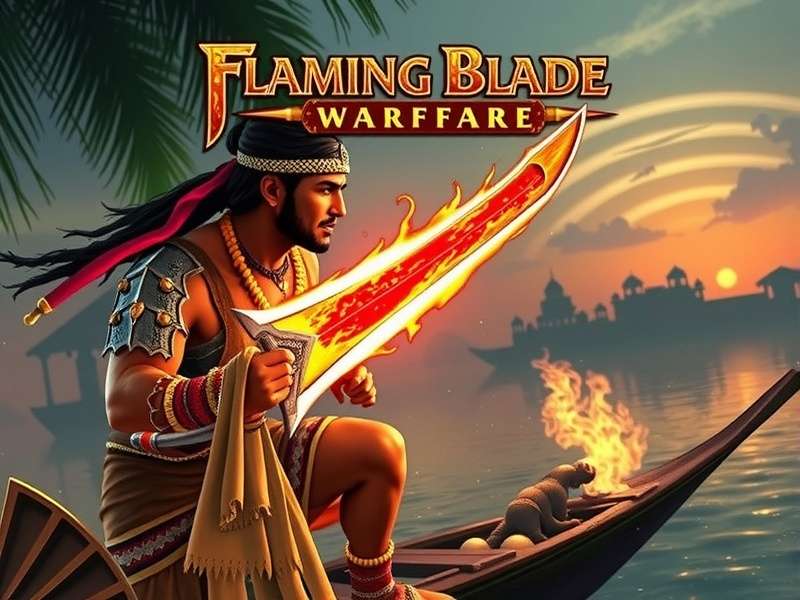
At the heart of Flaming Blade Warfare lies its innovative gameplay system, which blends the fast-paced action of international AAA RPGs with mechanics deeply rooted in Indian culture, mythology, and philosophy. The development team’s goal was to create a gameplay experience that feels familiar to seasoned RPG players while offering unique mechanics that reflect Indian identity. This balance of familiarity and originality is what makes Flaming Blade Warfare’s gameplay so compelling – it respects global gaming conventions while refusing to compromise on cultural authenticity.
2.1 Combat System: The Soul of Flaming Blade Warfare
Flaming Blade Warfare’s combat system is widely regarded as its most innovative feature, drawing directly from traditional Indian martial arts rather than the Western or Japanese styles that dominate most action RPGs. The development team spent over 18 months working with martial arts masters from across India to document and digitize over 500 distinct moves, strikes, blocks, and counters from six major Indian martial traditions. The result is a combat system that feels both fresh and authentic – every move in Flaming Blade Warfare has a real-world counterpart in Indian martial arts, making the combat feel grounded in cultural reality.
Players begin Flaming Blade Warfare with the “Shakti Stance” – a balanced, beginner-friendly fighting style that serves as the foundation for all other stances. As players progress through the game and gain Karma Points, they unlock four additional stances, each tied to one of the five classical Indian elements (Panchabhuta) and a specific region of India:
| Stance Name | Element | Regional Martial Art | Combat Style | Best For |
|---|---|---|---|---|
| Agni Stance (Fire) | Agni (Fire) | Kalaripayattu (Kerala) | Fast, aggressive, high damage, area attacks | Crowd control, jungle combat (Western Ghats) |
| Jal Stance (Water) | Jal (Water) | Chhau (West Bengal/Odisha) | Fluid, defensive, evasive, parry-focused | Marsh combat (Ganges Delta), boss fights |
| Vayu Stance (Air) | Vayu (Air) | Thang-ta (Manipur) | Quick, hit-and-run, aerial attacks, precision strikes | Mountain combat (Himalayas), stealth missions |
| Prithvi Stance (Earth) | Prithvi (Earth) | Mardani Khel (Maharashtra/Rajasthan) | Slow, heavy, armor-piercing, stun attacks | Desert combat (Thar), fortress sieges |
Each stance in Flaming Blade Warfare has its own unique combo system, with over 50 combos per stance that can be unlocked by spending Karma Points. What makes the combat system truly unique is its “Flow State” mechanic – when players chain together combos without taking damage, they enter a state of divine flow (inspired by the yogic concept of “samadhi”) that increases attack power, speed, and healing for a limited time. This mechanic rewards skillful play and encourages players to master the nuances of each stance rather than relying on button-mashing.
Flaming Blade Warfare also features a “Divine Weaponry” system that allows players to unlock and use astras (divine weapons) from Indian mythology. These include the Brahmastra (the most powerful weapon, capable of destroying entire armies), the Gajastra (elephant weapon that summons a celestial elephant to attack enemies), the Nagastra (snake weapon that unleashes venomous serpents), and the Agneyastra (fire weapon that rains down meteors). Each astra has a cooldown period and requires “Divine Energy” (earned through dharma-aligned actions) to use, making them powerful but strategic tools rather than spammable attacks.
2.2 Progression System: Karma Points & Dharma/Adharma
Unlike most RPGs that use an XP (Experience Points) system, Flaming Blade Warfare uses a unique “Karma Points” system that is deeply rooted in Indian philosophical concepts of dharma (righteousness) and adharma (unrighteousness). Every action in the game – from completing quests to defeating enemies to making dialogue choices – earns the player either Dharma Karma or Adharma Karma, which impacts both the character’s progression and the game’s narrative.
Dharma Karma is earned by:
- Helping non-player characters (NPCs) without expecting rewards
- Defeating evil enemies (rakshasas, danavas, corrupted warriors)
- Making choices that uphold justice, compassion, and honesty
- Protecting innocent civilians and sacred sites
- Completing side quests that preserve cultural heritage
Adharma Karma is earned by:
- Stealing from NPCs or sacred sites
- Killing innocent civilians or friendly NPCs
- Making choices that prioritize personal gain over justice
- Allying with evil characters or factions
- Destroying cultural or religious sites
Karma Points can be spent in Flaming Blade Warfare’s “Spiritual Skill Tree,” which is divided into three branches that reflect different paths of self-development in Indian philosophy:
2.2.1 Kshatriya Branch (Warrior Path)
The Kshatriya Branch focuses on physical combat abilities, reflecting the warrior caste’s traditional role in Indian society. This branch includes upgrades to weapon damage, combo length, blocking efficiency, and stamina. Key abilities in the Kshatriya Branch include:
- Veer Abhaya (Warrior’s Fearlessness): Reduces damage taken by 20% and increases attack power by 15% when health is below 30%
- Shastra Mastery (Weapon Mastery): Unlocks advanced combos for all stances and increases weapon durability by 50%
- Vyuharaja (Formation King): Allows players to command NPC allies in battle, setting up tactical formations inspired by the Mahabharata’s battle formations
- Ahimsa Paramo Dharma (Non-Violence is the Highest Duty): Unlocks the ability to disarm enemies instead of killing them, earning bonus Dharma Karma
2.2.2 Rishi Branch (Sage Path)
The Rishi Branch focuses on divine and spiritual abilities, reflecting the sage’s role as a channel of divine power in Indian mythology. This branch includes upgrades to astras, healing abilities, and resistance to dark magic. Key abilities in the Rishi Branch include:
- Amrita Nadi (Nectar Channel): Passively heals the player and nearby allies over time, with healing increased by Dharma Karma
- Tapasya (Asceticism): Reduces the cooldown of astras by 40% and increases their power by 25%
- Maya Vidya (Illusion Knowledge): Allows the player to create illusions to distract enemies or avoid combat entirely
- Atma Jyoti (Soul Light): Creates a protective barrier of divine light that blocks all dark magic attacks and purifies corrupted enemies
2.2.3 Rajarshi Branch (Philosopher-King Path)
The Rajarshi Branch balances combat and spiritual abilities, reflecting the ideal of the philosopher-king in Indian political philosophy. This branch includes upgrades to dialogue options, stealth, exploration, and diplomacy. Key abilities in the Rajarshi Branch include:
- Raj Dharma (Royal Duty): Unlocks special dialogue options with kings and nobles, allowing players to resolve conflicts through diplomacy rather than combat
- Guptagati (Stealth Movement): Makes the player invisible to enemies when moving slowly and unlocks silent takedowns inspired by Indian espionage techniques
- Desha Bhakti (Patriotism): Increases the loyalty of NPC allies and unlocks region-specific abilities in each of Flaming Blade Warfare’s six kingdoms
- Dharma Sankalpa (Righteous Resolution): Allows players to reset one major narrative choice per playthrough, providing a second chance to align with dharma
The Karma system in Flaming Blade Warfare has been praised by both players and critics for its depth and cultural relevance. Unlike morality systems in Western games (which typically use a simple “good/evil” binary), Flaming Blade Warfare’s system reflects the nuanced Indian concept of dharma – what is righteous in one situation may be unrighteous in another, and players must consider the context and consequences of their actions. This moral complexity makes Flaming Blade Warfare’s progression system feel more meaningful and reflective of real-world ethical dilemmas.
2.3 Open World Exploration in Flaming Blade Warfare
Flaming Blade Warfare features a semi-open world map that spans approximately 120 square kilometers, divided into six distinct kingdoms (regions) that reflect different parts of India. The map is designed to encourage exploration, with hidden secrets, side quests, and collectibles scattered throughout each region. What makes the open world unique is its dynamic ecosystem – weather, time of day, and player actions all impact the world in meaningful ways, creating a living, breathing version of ancient India.
2.3.1 The Six Kingdoms of Flaming Blade Warfare
-
Suryanagar (Kingdom of the Sun) 🌞
Located in the arid plains of Rajasthan and Gujarat, Suryanagar is ruled by the Suryavanshi dynasty (descendants of the sun god Surya). This region features massive desert forts, sand dunes, and oasis villages, with enemies including desert bandits, sand rakshasas, and cursed Rajput warriors. Suryanagar is the starting region of Flaming Blade Warfare, where players first acquire the Agni Khadga and learn the basics of combat and exploration.
-
Jalpur (Kingdom of Water) 🌊
Spanning the Ganges and Brahmaputra delta regions of West Bengal and Assam, Jalpur is ruled by the Chandravanshi dynasty (descendants of the moon god Chandra). This region features lush mangrove forests, riverine villages, and floating temples, with enemies including water nagas, swamp rakshasas, and pirate gangs. Jalpur is where players unlock the Jal Stance and learn water-based combat techniques.
-
Vanarajya (Kingdom of the Forest) 🌿
Covering the dense forests of central India (Madhya Pradesh, Chhattisgarh) and the Western Ghats (Karnataka, Kerala), Vanarajya is ruled by tribal chiefs aligned with Vishnu (in his Varaha avatar). This region features ancient banyan trees, hidden cave systems, and tribal villages, with enemies including forest spirits, shape-shifting rakshasas, and poacher gangs. Vanarajya is where players unlock stealth abilities and complete quests focused on environmental protection.
-
Himalaya Rajya (Kingdom of the Mountains) ⛰️
Located in the Himalayan regions of Uttarakhand and Himachal Pradesh, Himalaya Rajya is ruled by Buddhist monks aligned with Shiva. This region features snow-capped peaks, mountain monasteries, and glacial valleys, with enemies including ice rakshasas, yeti-like creatures (Yeti Rakshas), and rogue ascetics. Himalaya Rajya is where players unlock the Vayu Stance and learn aerial combat techniques.
-
Dravida Nadu (Kingdom of the South) 🔥
Covering the southern tip of India (Tamil Nadu, Kerala, Karnataka), Dravida Nadu is ruled by the Chola dynasty aligned with Agni (the fire god). This region features massive temple complexes, backwater canals, and spice plantations, with enemies including fire rakshasas, temple guardians, and rival warrior clans. Dravida Nadu is where players unlock the Agni Stance and learn the full power of the Agni Khadga.
-
Andhaka Pradesh (Kingdom of Darkness) 🌑
Located in the remote northeastern regions of India (Nagaland, Mizoram), Andhaka Pradesh is ruled by the Asura king Mahakala and aligned with Kali (in her destructive form). This cursed region features volcanic wastelands, floating mountains, and dark temples, with enemies including elite asura warriors, dark nagas, and Mahakala’s personal guard. Andhaka Pradesh is the final region of Flaming Blade Warfare, where players face the game’s toughest challenges and the final boss.
2.3.2 Travel & Transportation
Flaming Blade Warfare offers multiple ways to traverse its open world, each tied to Indian culture and mythology:
- On Foot: The primary method of travel, allowing players to explore every corner of the map and discover hidden secrets. Players can sprint, climb, swim, and use parkour techniques inspired by Indian martial arts to navigate the environment.
- Marwari Horse: A fast, agile mount based on the iconic Marwari horse breed of Rajasthan. The Marwari horse can be customized with different saddles, armor, and decorative elements (like henna patterns) and has special abilities like desert navigation (reduces sandstorm effects) and combat charging.
- Elephant: A slow but powerful mount that can break through obstacles and carry multiple passengers. Elephants are particularly useful in fortress sieges and can be equipped with howdahs (seats) and armor for combat.
- Vimana: A flying vehicle inspired by the mythical vimanas of ancient Indian texts (like the Vedas and Puranas). Unlocked in the later stages of Flaming Blade Warfare, the Vimana allows players to fly over the map and access previously unreachable areas. The Vimana is powered by divine energy and has limited fuel, requiring players to use it strategically.
- Boat: Essential for traveling the rivers and backwaters of Jalpur and Dravida Nadu. Players can use small fishing boats for stealth travel or large war boats for naval combat against pirate gangs.
2.3.3 Dynamic Weather & Time Systems
Flaming Blade Warfare features a dynamic weather system that impacts both gameplay and visuals, with each region having its own unique weather patterns:
- Suryanagar: Intense sandstorms that reduce visibility and increase enemy aggression; occasional monsoon rains that temporarily transform the desert into a muddy landscape
- Jalpur: Constant rainfall and monsoons that make combat slower and more slippery; cyclones that create dangerous storm surges in the delta regions
- Vanarajya: Heavy forest rains that create fog and enhance stealth; occasional forest fires (caused by lightning or enemy actions) that force players to evacuate quickly
- Himalaya Rajya: Blizzards that reduce movement speed and cause hypothermia; avalanches that block mountain passes and create new paths
- Dravida Nadu: Humid heat that reduces stamina regeneration; occasional thunderstorms that power up fire-based abilities (due to Agni’s influence)
- Andhaka Pradesh: Volcanic ash fall that damages health over time; dark storms that enhance enemy powers and reduce the effectiveness of light-based abilities
The time system in Flaming Blade Warfare cycles between day and night (12 hours each), with different enemies, quests, and events available at different times. For example, dark creatures (rakshasas, danavas) are more powerful and numerous at night, while divine quests and NPC interactions are primarily available during the day. Players can use a “Sandglass” item to fast-forward time, but this consumes Karma Points and may have unintended consequences (like missing important events).
2.4 Side Content & Replayability in Flaming Blade Warfare
Beyond its 40-50 hour main story, Flaming Blade Warfare offers over 150 side quests, 50 challenge missions, and numerous endgame activities that provide hundreds of hours of additional gameplay. The side content is particularly praised for its cultural authenticity – each side quest is based on regional folklore from the part of India where it takes place, making exploration rewarding both in terms of gameplay and cultural learning.
2.4.1 Side Quest Types
Side quests in Flaming Blade Warfare fall into several categories:
- Folklore Quests: Based on regional Indian folktales, these quests task players with resolving supernatural problems (like a cursed village or a mischievous spirit) using both combat and diplomacy. Examples include “The Curse of the Banyan Tree” (Vanarajya) – based on a Maharashtrian folktale about a tree spirit – and “The Fisherman and the Naga Princess” (Jalpur) – based on a Bengali folktale about a water spirit.
- Martial Arts Quests: These quests task players with learning new combat techniques from master warriors in each region. Completing these quests unlocks new combos and stances, making them essential for players who want to master Flaming Blade Warfare’s combat system.
- Cultural Preservation Quests: These quests task players with protecting historical sites, artifacts, and traditions from destruction by Mahakala’s forces. Examples include “Defend the Chola Temples” (Dravida Nadu) – protecting ancient Tamil temples from asura attacks – and “Preserve the Vedic Manuscripts” (Himalaya Rajya) – retrieving sacred texts stolen by rogue ascetics.
- Political Quests: These quests involve navigating the complex politics of Flaming Blade Warfare’s six kingdoms, allying with different factions, and resolving conflicts between rulers. These quests have major impacts on the game’s narrative and can even change the outcome of the main story.
- Exploration Quests: These quests task players with exploring the farthest reaches of the map to discover hidden temples, ancient ruins, and mythical locations. Examples include “Find the Lost City of Dwarka” (Suryanagar) – based on the legendary submerged city of Lord Krishna – and “Climb Mount Kailash” (Himalaya Rajya) – the sacred abode of Lord Shiva.
2.4.2 Endgame Content
After completing the main story of Flaming Blade Warfare, players unlock several endgame activities that provide additional challenges and rewards:
- Kshatriya Arena: A wave-based combat challenge located in Suryanagar’s capital city. Players face increasingly difficult waves of enemies (up to 100 waves) with no health regeneration between waves. Completing all waves unlocks the “Invincible Kshatriya” title and the legendary Indra Khadga (Thunder Sword) – the most powerful weapon in Flaming Blade Warfare.
- Divine Trials: A series of 12 puzzle-based dungeons, each dedicated to a different Hindu deity. These trials test both combat skill and problem-solving ability, with puzzles based on Indian mathematics, logic, and mythology. Completing all trials unlocks the “Deva Avatar” form – a temporary transformation into a divine warrior with god-like powers.
- Asura Hunt: A bounty hunting system where players track down and defeat powerful asura lords that have escaped Mahakala’s defeat. Each asura lord has unique abilities and requires different combat strategies, making this endgame content highly replayable.
- New Game+: Allows players to restart the game with all their weapons, abilities, and Karma Points intact, facing stronger enemies and new dialogue options. New Game+ also unlocks additional story content, including alternate cutscenes and secret endings that are not available in the first playthrough.
- Mythology Mode: A non-combat mode that allows players to explore Flaming Blade Warfare’s world and learn about Indian mythology through interactive exhibits, NPC interviews, and historical context. This mode is particularly popular among educational institutions using Flaming Blade Warfare as a teaching tool.
2.5 Accessibility Features in Flaming Blade Warfare
Recognizing India’s diverse gaming population, the development team of Flaming Blade Warfare included extensive accessibility features to ensure the game is playable by people of all abilities:
- Multiple Control Schemes: Customizable controls for different playstyles, including one-handed mode (for mobile players with limited mobility) and voice control (for players with physical disabilities).
- Difficulty Settings: Four difficulty levels (Story, Normal, Warrior, Legendary) that adjust enemy health, damage, and AI behavior. Story mode removes most combat challenges, allowing players to experience Flaming Blade Warfare’s narrative without barriers.
- Visual Accessibility: High contrast mode, color blindness filters (protanopia, deuteranopia, tritanopia), and adjustable text size for players with visual impairments.
- Auditory Accessibility: Subtitles for all dialogue and audio cues, visual feedback for important audio events (like enemy ambushes), and adjustable sound effects volume for players with hearing impairments.
- Cognitive Accessibility: Quest markers with detailed descriptions, pause menu tutorials that can be accessed at any time, and a “slow combat” mode that reduces the speed of combat for players who need more time to react.
- Language Support: Full localization in 10 Indian languages (Hindi, Tamil, Telugu, Bengali, Marathi, Gujarati, Punjabi, Kannada, Malayalam, Odia) plus English, with voice acting in Hindi and English and subtitles in all supported languages.
These accessibility features have made Flaming Blade Warfare one of the most inclusive games ever developed in India, earning it praise from disability rights organizations and making it accessible to players who might otherwise be unable to enjoy AAA gaming experiences.
3. Lore & Setting of Flaming Blade Warfare
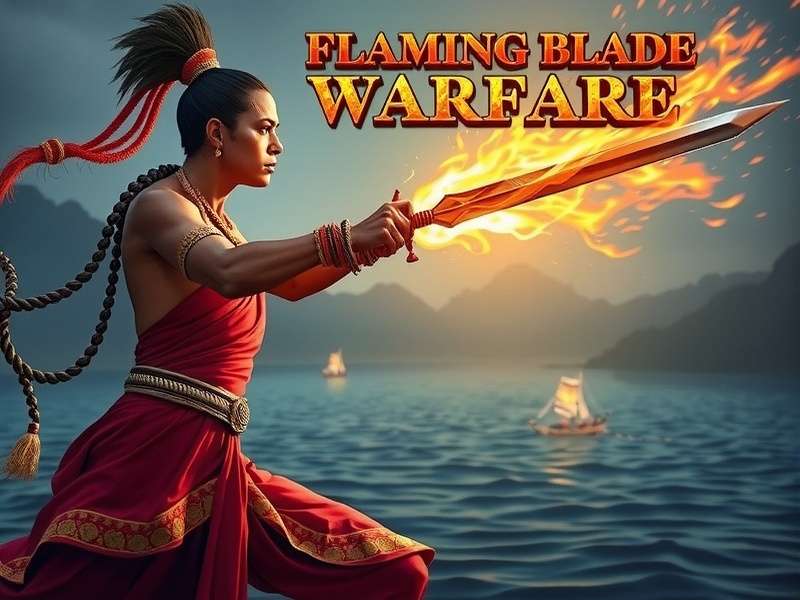
The lore and setting of Flaming Blade Warfare represent the culmination of over two years of research into Indian mythology, history, and folklore by a team of 12 cultural consultants, including Indologists, historians, archaeologists, and folklorists from across India. The game’s world – Bharatvarsha 3000 – is an alternate timeline of ancient India that blends historical accuracy with mythological fantasy, creating a setting that feels both familiar and fantastical to Indian players. Unlike many Western games that use Indian mythology as superficial window dressing, Flaming Blade Warfare integrates mythology into every aspect of its worldbuilding – from the political structure of its kingdoms to the abilities of its characters to the motivations of its antagonists.
3.1 The Historical & Mythological Context of Flaming Blade Warfare
Flaming Blade Warfare is set in 3000 BCE (Bharatvarsha 3000), 500 years after the Kurukshetra War – the legendary battle at the heart of the Mahabharata. In the canonical Mahabharata, the Pandavas emerge victorious over the Kauravas, restoring dharma to the kingdom of Hastinapura. However, in Flaming Blade Warfare’s alternate timeline, the war ended in a stalemate – both the Pandavas and Kauravas were nearly wiped out, and their surviving descendants scattered across India, forming the six kingdoms that players explore in the game. This power vacuum weakened the divine protections that the gods had placed over Bharatvarsha, allowing dark forces to return to the mortal realm.
The backstory of Flaming Blade Warfare is rooted in the concept of the “Yugas” (ages) from Hindu cosmology. According to Hindu tradition, the world cycles through four yugas: Satya Yuga (Age of Truth), Treta Yuga (Age of Virtue), Dvapara Yuga (Age of Discord), and Kali Yuga (Age of Darkness). Flaming Blade Warfare is set at the end of the Dvapara Yuga, just before the onset of the Kali Yuga – a time when dharma is in decline and adharma is on the rise. This cosmological context gives the game’s narrative a sense of cosmic significance – the player’s actions are not just about defeating a single villain but about determining whether Bharatvarsha will fall into the Kali Yuga or return to the Satya Yuga.
The game’s central conflict – between the forces of dharma (led by the player) and the forces of adharma (led by Mahakala) – reflects the eternal struggle between good and evil in Indian philosophy, known as the “dharmic cycle.” This cycle is not a simple binary of good vs. evil but a complex balance between opposing forces that are necessary for the universe to function. As the god Vishnu explains to the player in Flaming Blade Warfare: “Dharma and adharma are two sides of the same coin – without darkness, there can be no light, and without light, no darkness. Your role is not to destroy darkness but to restore balance between the two.” This philosophical depth sets Flaming Blade Warfare’s narrative apart from the simplistic “save the world” stories of many Western RPGs.
3.2 The Six Kingdoms of Bharatvarsha 3000
Flaming Blade Warfare’s world is divided into six major kingdoms, each with its own unique culture, politics, and relationship to the divine. The kingdoms are based on real historical regions of India and reflect the country’s incredible cultural diversity:
3.2.1 Suryanagar (Kingdom of the Sun)
Located in the northwestern region of Bharatvarsha (modern-day Rajasthan and Gujarat), Suryanagar is ruled by the Suryavanshi dynasty – descendants of Lord Rama (himself a descendant of the sun god Surya). The capital of Suryanagar is the fortified city of Suryapur, built around a massive temple dedicated to Surya. The people of Suryanagar are known for their warrior culture, their expertise in desert warfare, and their strict adherence to dharma. The kingdom’s economy is based on trade (particularly spices and textiles) along the ancient Silk Road, which passes through the Thar Desert.
In Flaming Blade Warfare’s backstory, Suryanagar was the first kingdom to be attacked by Mahakala’s forces, as its connection to Surya (the enemy of darkness) makes it a symbolic target. The current ruler of Suryanagar is King Prithvi Raj III, a wise but aging monarch who struggles to protect his kingdom from both external threats (Mahakala’s forces) and internal dissent (nobles who seek to usurp his power). The player first meets King Prithvi Raj in the opening hours of Flaming Blade Warfare, who tasks them with retrieving the Agni Khadga from a cursed desert temple to save the kingdom.
The culture of Suryanagar is based on Rajput traditions, with a strong emphasis on honor, bravery, and loyalty. The kingdom’s warriors (known as “Surya Kshatriyas”) wear bright orange and red armor (colors associated with the sun) and fight with curved swords (talwars) and spears. The architecture of Suryanagar features massive forts with intricate carvings of sun symbols, stepwells (baoris) for water storage, and havelis (mansions) with jharokha windows – all based on real Rajasthani architecture.
3.2.2 Jalpur (Kingdom of Water)
Located in the eastern region of Bharatvarsha (modern-day West Bengal, Assam, and Bangladesh), Jalpur is ruled by the Chandravanshi dynasty – descendants of Lord Krishna (himself a descendant of the moon god Chandra). The capital of Jalpur is the floating city of Jaladhipur, built on a network of rivers and canals in the Ganges delta. The people of Jalpur are known for their naval prowess, their expertise in water magic, and their syncretic religious practices that blend Hinduism with local tribal traditions.
Jalpur plays a crucial role in Flaming Blade Warfare’s narrative, as it is the only kingdom with access to the “Amrita Sagar” (Ocean of Nectar) – a mythical body of water that can heal any wound and even bring the dead back to life. Mahakala seeks to corrupt the Amrita Sagar to create an army of immortal asuras, making Jalpur a key battleground in the game’s second act. The current ruler of Jalpur is Queen Tara Devi, a young but capable monarch who is a master of water magic and Chhau dance (a martial art that combines dance and combat).
The culture of Jalpur is based on Bengali and Assamese traditions, with a strong emphasis on art, music, and literature. The kingdom’s warriors (known as “Jal Kshatriyas”) fight with tridents (trishulas) and curved swords (kattars) and wear blue and white armor (colors associated with water). The architecture of Jalpur features floating temples, terracotta houses, and bamboo bridges – all based on real Bengali and Assamese architecture. The kingdom is also known for its festivals, particularly Durga Puja (celebrated in the game as a major in-game event with unique quests and rewards).
3.2.3 Vanarajya (Kingdom of the Forest)
Located in the central region of Bharatvarsha (modern-day Madhya Pradesh, Chhattisgarh, and the Western Ghats), Vanarajya is not ruled by a single monarch but by a council of tribal chiefs known as the “Vanar Sabha” (Forest Assembly). The Vanar Sabha is advised by a council of sages who communicate with the forest spirits (vanadevatas) that protect the region. The people of Vanarajya are known for their deep connection to nature, their expertise in archery and herbal medicine, and their resistance to outside influence.
Vanarajya is home to the “Parijata Tree” – a mythical tree that grants immortality to those who eat its fruits – making it a target for Mahakala’s forces in Flaming Blade Warfare’s third act. The player must ally with the Vanar Sabha to protect the Parijata Tree from destruction, completing quests that involve healing the forest from dark corruption and negotiating with rival tribal factions.
The culture of Vanarajya is based on the tribal traditions of central India (Gonds, Bhils, Santhals) and the Western Ghats (Todas, Kurumbas). The kingdom’s warriors (known as “Van Kshatriyas”) fight with bows and arrows, spears, and axes and wear green and brown armor made from natural materials (leather, wood, leaves). The architecture of Vanarajya features treehouses, cave dwellings, and stone circles – all based on real tribal architecture. The kingdom is known for its festivals that celebrate the changing seasons, particularly the “Van Mahotsav” (Forest Festival) – a major in-game event that involves planting trees and healing corrupted forest spirits.
3.2.4 Himalaya Rajya (Kingdom of the Mountains)
Located in the northern region of Bharatvarsha (modern-day Uttarakhand, Himachal Pradesh, and Nepal), Himalaya Rajya is ruled by a council of Buddhist monks known as the “Himalaya Sangha” (Mountain Assembly), who answer to the Dalai Lama (a divine figure in the game’s lore). The capital of Himalaya Rajya is the mountain monastery of Kailashnath, built on the slopes of Mount Kailash – the sacred abode of Lord Shiva. The people of Himalaya Rajya are known for their spiritual practices, their expertise in guerrilla warfare, and their ability to survive in harsh mountain conditions.
Himalaya Rajya is home to the “Shiva Lingam” – a sacred stone that contains the essence of Lord Shiva – making it a key location in Flaming Blade Warfare’s fourth act. The player must climb Mount Kailash to retrieve the Shiva Lingam, which is needed to unlock the full power of the Agni Khadga and defeat Mahakala’s most powerful generals.
The culture of Himalaya Rajya is based on Tibetan and Himalayan traditions, with a blend of Hinduism and Buddhism. The kingdom’s warriors (known as “Hima Kshatriyas”) fight with swords (khukris) and throwing knives and wear white and maroon armor (colors associated with Himalayan Buddhism). The architecture of Himalaya Rajya features monasteries with prayer flags, stone stupas, and ice temples – all based on real Himalayan architecture. The kingdom is known for its meditation practices, which players can learn to increase their spiritual abilities and reduce the cooldown of divine weapons in Flaming Blade Warfare.
3.2.5 Dravida Nadu (Kingdom of the South)
Located in the southern region of Bharatvarsha (modern-day Tamil Nadu, Kerala, Karnataka, and Andhra Pradesh), Dravida Nadu is ruled by the Chola dynasty – one of the most powerful empires in ancient Indian history. The capital of Dravida Nadu is the coastal city of Thanjavur, built around a massive temple dedicated to Lord Shiva. The people of Dravida Nadu are known for their advanced civilization, their expertise in maritime trade, and their mastery of Kalaripayattu (the oldest martial art in the world).
Dravida Nadu is where the Agni Khadga was originally forged by the celestial architect Vishwakarma, making it a key location in Flaming Blade Warfare’s fifth act. The player must travel to the Chola capital to learn the secrets of the Agni Khadga from the temple priests, completing quests that involve protecting the temple from asura attacks and uncovering the sword’s forgotten history.
The culture of Dravida Nadu is based on Tamil and Kerala traditions, with a strong emphasis on art, literature, and martial arts. The kingdom’s warriors (known as “Dravida Kshatriyas”) fight with swords (katas) and shields and wear green and red armor (colors associated with the Chola dynasty). The architecture of Dravida Nadu features massive temple complexes with gopurams (tower gateways), intricate stone carvings, and stepwells – all based on real Chola and Pallava architecture. The kingdom is known for its classical dance forms (Bharatanatyam, Kathakali), which players can learn to unlock special combat abilities in Flaming Blade Warfare.
3.2.6 Andhaka Pradesh (Kingdom of Darkness)
Located in the northeastern region of Bharatvarsha (modern-day Nagaland, Mizoram, and Arunachal Pradesh), Andhaka Pradesh is the cursed kingdom ruled by the Asura king Mahakala. The capital of Andhaka Pradesh is the volcanic fortress of Andhakapur, built in the center of a massive caldera. The kingdom is a wasteland of volcanic rock, dark forests, and floating mountains, corrupted by Mahakala’s dark magic. The only inhabitants are asuras, rakshasas, and other dark creatures – all loyal to Mahakala.
Andhaka Pradesh is the final destination in Flaming Blade Warfare, where players face Mahakala in a climactic final battle. The kingdom is designed to be the most challenging region in the game, with powerful